
Multimeter BK5491A — Drift Analysis
Drift analysis and trend monitoring for Multimeter BK5491A.
Overview
Status: Fit for continued use.
- Internal Specification
- Analyt MTC — BK5491A 1-year accuracy specifications
- Manufacturer Specification
- BK Precision 5491A Manual — 1-year accuracy specifications
- Calibration Provider(s)
- EuroPascal GmbH (2024–2025)
- Calibration Cycles
- 2 cycles (2024–2025)
This is a dual-display multimeter used in the calibration workflow to read DC voltage and current signals from devices under test. All calibrations have been performed by EuroPascal GmbH. The device has only two calibration cycles (2024 and 2025), so no meaningful trend analysis is possible yet. The device has never been adjusted.
Context. With only two data points, the drift assessment is preliminary. The next calibration will provide the first opportunity for trend analysis.
DC Current (A)
| Setpoint (A) | 2024 | 2025 | Trend |
|---|---|---|---|
| As-found Dev/Spec — measured error normalized to internal specification | |||
| 0 | 2e-08 | 2e-08 | — |
| 0.0004 | 1e-07 | 1e-07 | — |
| 0.004 | 9e-07 | 8e-07 | — |
| 0.04 | 0 | 1e-06 | — |
| 0.4 | 2e-05 | 1e-05 | — |
| 2 | -0.002682642 | -0.002128353 | — |
| Inter-calibration drift Dev/Spec (Δ) — change since previous calibration, normalized | |||
| 0 | — | 0 | — |
| 0.0004 | — | 0 | — |
| 0.004 | — | -1e-07 | — |
| 0.04 | — | 1e-06 | — |
| 0.4 | — | -1e-05 | — |
| 2 | — | 0.000554289 | — |
Figure 1 shows each calibration's as-found deviation normalized to the internal specification. Values at ±1.0 reach the specification limit. The shaded blue envelope covers the full spread across all setpoints; the amber band adds measurement uncertainty. For the full methodology, see Equipment Monitoring & Drift Analysis.
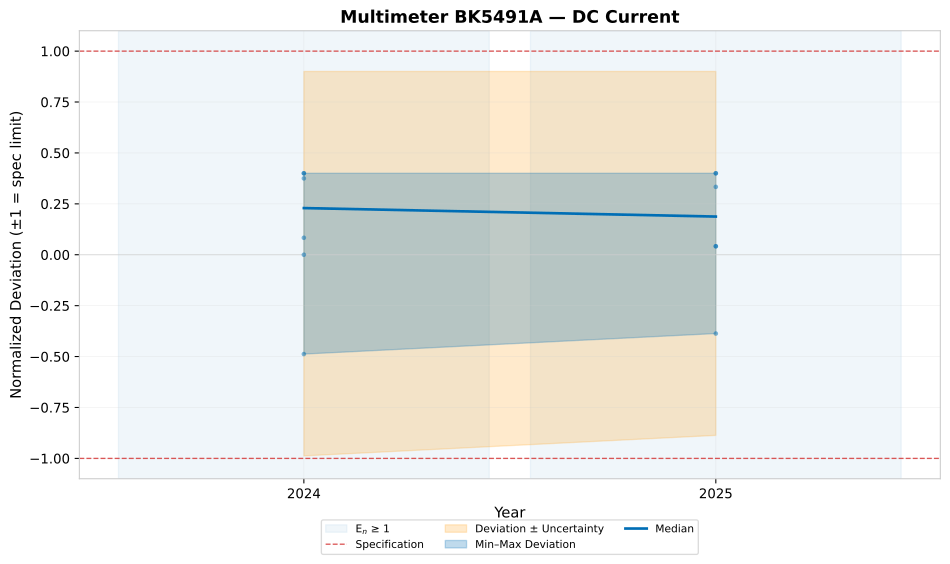
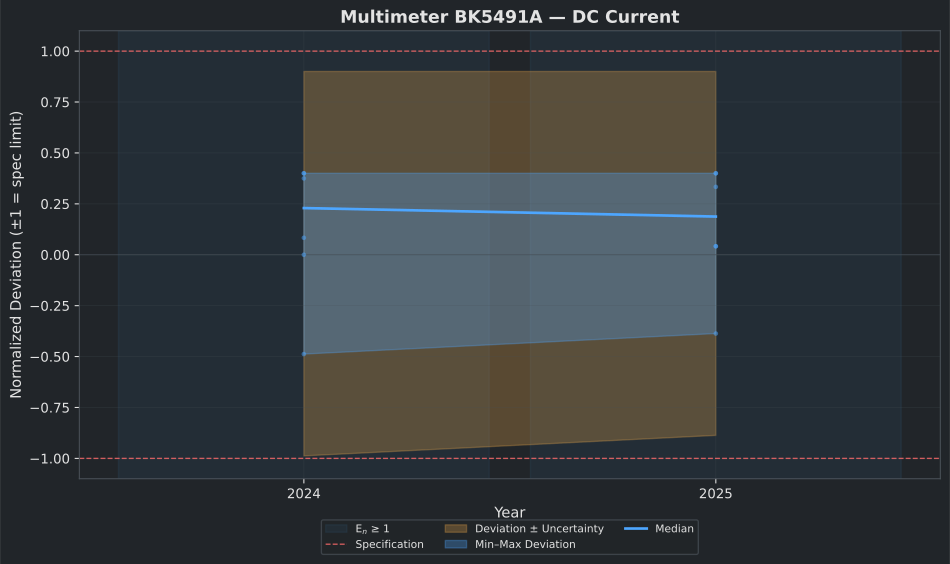
Figure 2 shows the drift between consecutive calibrations — how much the device changed since it was last calibrated or adjusted. This isolates the device’s instability from corrections applied during calibration.
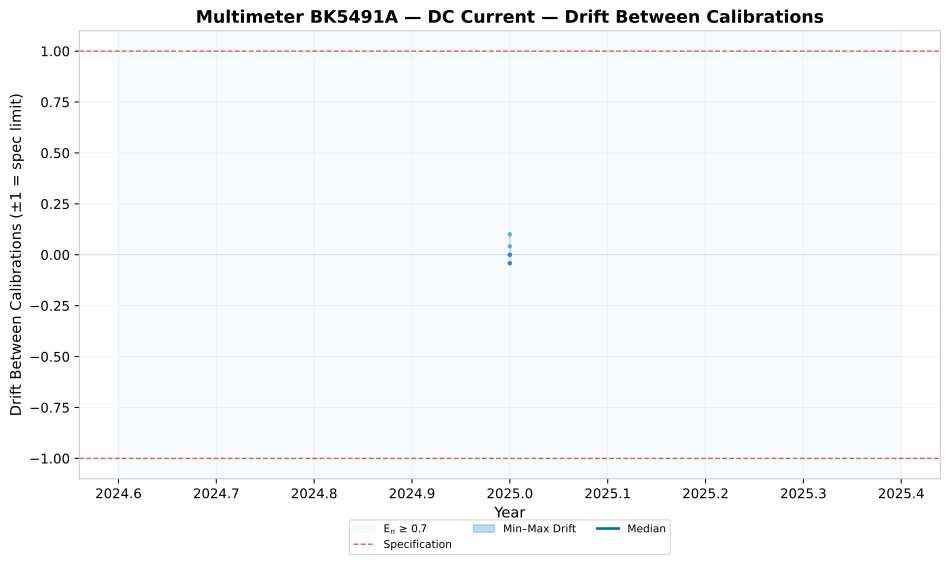
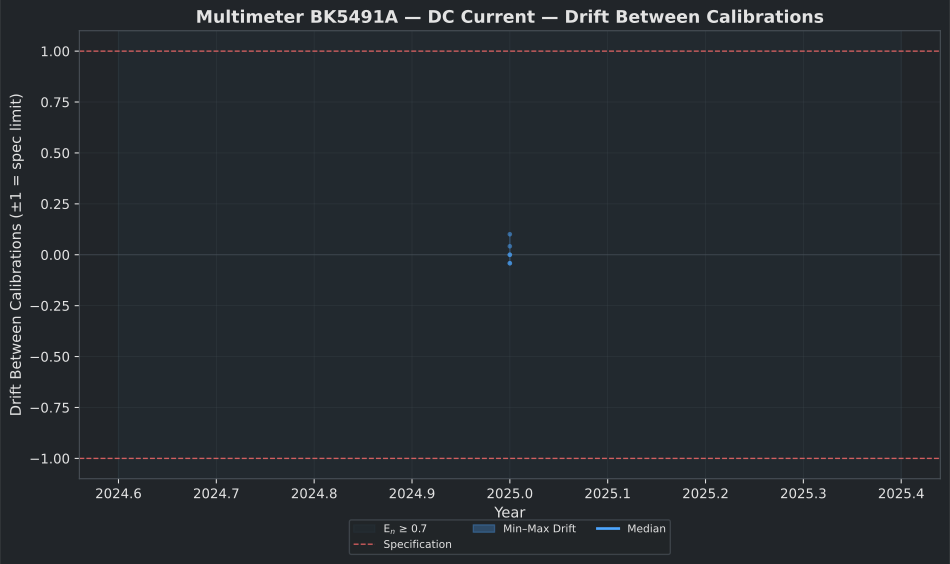
All six setpoints are within specification across both cycles. The low-current setpoints (0 and 0.4 mA) show a fixed offset of +0.40 — consistent with resolution limits at the bottom of the range. The 2 A setpoint shows the largest magnitude at −0.49 (2024), improving to −0.39 in 2025. Inter-calibration drift is negligible across all setpoints.
DC Voltage (V)
| Setpoint (V) | 2024 | 2025 | Trend |
|---|---|---|---|
| As-found Dev/Spec — measured error normalized to internal specification | |||
| -490 | -0.01 | -0.03 | — |
| -49 | -0.002 | -0.005 | — |
| -4.9 | -0.0003 | -0.0007 | — |
| -2.5 | 0 | -0.0003 | — |
| -1 | 0.0002 | -0.0001 | — |
| -0.5 | 0.0002 | 0.0001 | — |
| 0 | 2.04815212e-06 | 1.02407606e-06 | — |
| 0.01 | 0 | 0 | — |
| 0.25 | 2e-05 | 2e-05 | — |
| 0.49 | 3e-05 | 5e-05 | — |
| 0.5 | 0.0003 | 0.0001 | — |
| 1 | 0.0003 | 0.0002 | — |
| 2.5 | 0.0005 | 0.0005 | — |
| 4.9 | 0.0008 | 0.0009 | — |
| 49 | 0.003 | 0.005 | — |
| 490 | 0.02 | 0.04 | — |
| 750 | 0 | 0.1 | — |
| Inter-calibration drift Dev/Spec (Δ) — change since previous calibration, normalized | |||
| -490 | — | -0.02 | — |
| -49 | — | -0.003 | — |
| -4.9 | — | -0.0004 | — |
| -2.5 | — | -0.0003 | — |
| -1 | — | -0.0003 | — |
| -0.5 | — | -0.0001 | — |
| 0 | — | -1.0241e-06 | — |
| 0.01 | — | 0 | — |
| 0.25 | — | 0 | — |
| 0.49 | — | 2e-05 | — |
| 0.5 | — | -0.0002 | — |
| 1 | — | -0.0001 | — |
| 2.5 | — | 0 | — |
| 4.9 | — | 0.0001 | — |
| 49 | — | 0.002 | — |
| 490 | — | 0.02 | — |
| 750 | — | 0.1 | — |
Figure 3 shows each calibration's as-found deviation normalized to the internal specification. Values at ±1.0 reach the specification limit. The shaded blue envelope covers the full spread across all setpoints; the amber band adds measurement uncertainty. For the full methodology, see Equipment Monitoring & Drift Analysis.
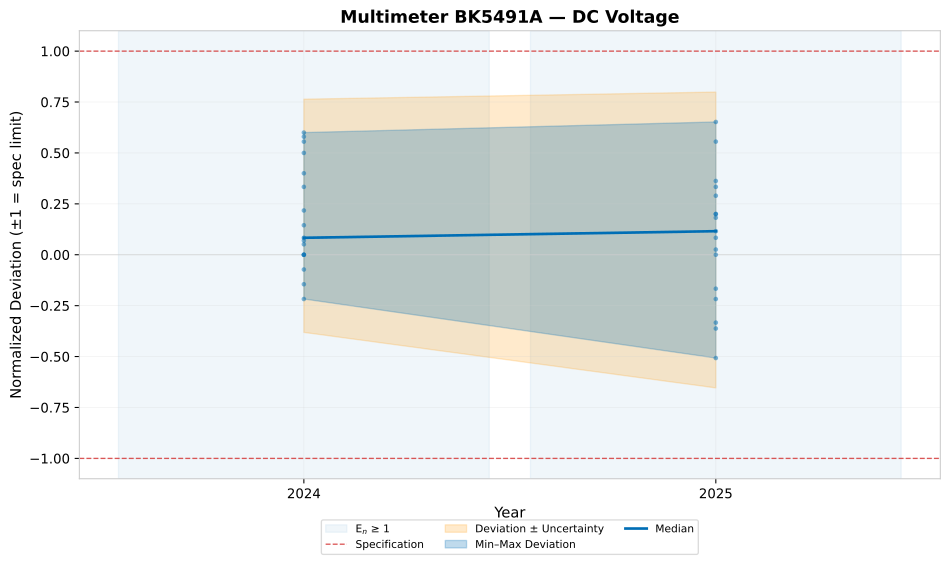
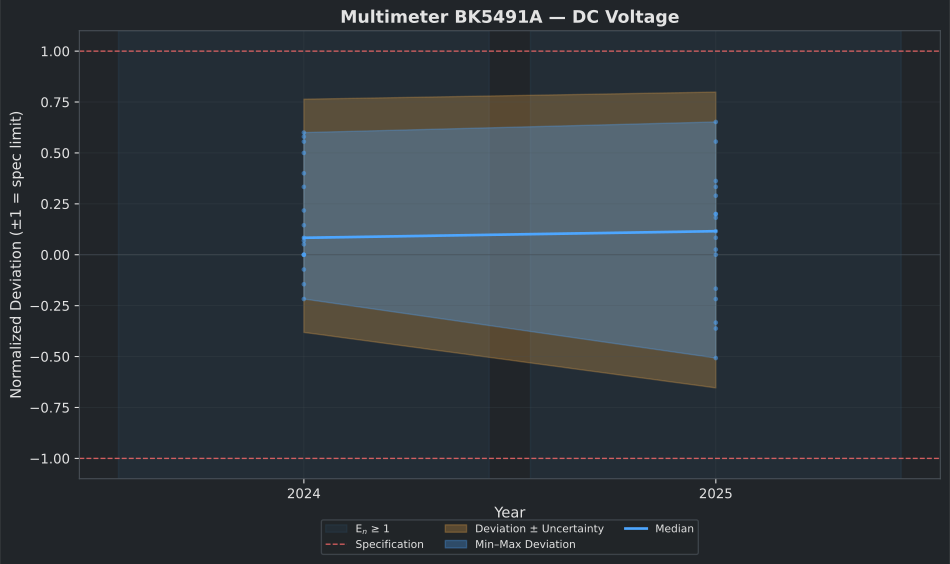
Figure 4 shows the drift between consecutive calibrations — how much the device changed since it was last calibrated or adjusted. This isolates the device’s instability from corrections applied during calibration.
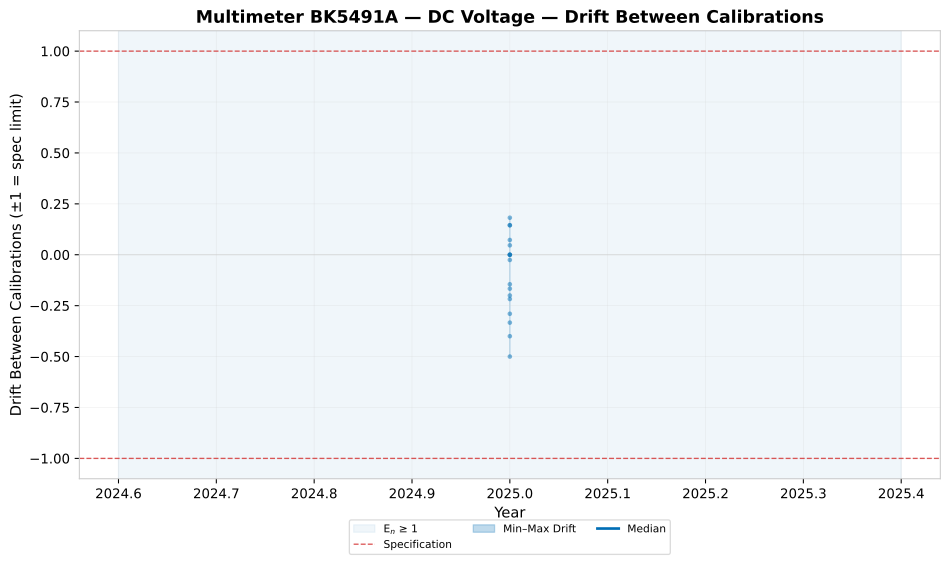
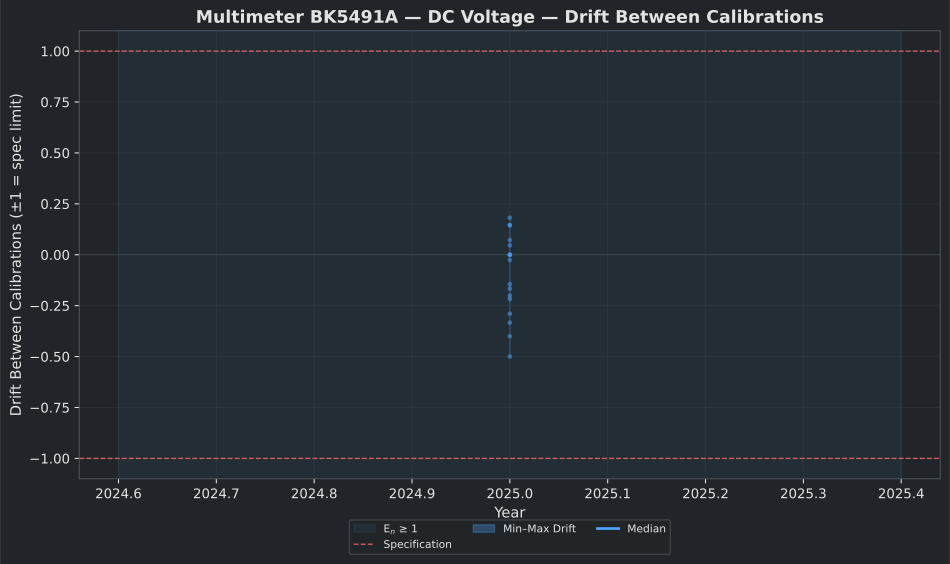
All seventeen setpoints are within specification across both cycles, spanning five ranges (500 mV to 1000 V). The 5 V range setpoints show the highest deviations — worst case +0.65 (4.9 V, 2025), which is past half the specification limit but not yet a concern with only two data points. The inter-calibration drift at −1 V was −0.50 — large for a single cycle, but again too early to distinguish a trend from noise.
Conclusion
Calibration interval. The four-year interval applies. Electrical measurement uncertainty is negligible compared to mass flow calibration uncertainty — the dominant contributors are the flow reference standards, not the electrical signal chain. This is why a longer calibration interval is justified for the electrical equipment. With only two cycles, the drift record is too short for a definitive assessment. The 5 V range values approaching two-thirds of specification (0.65 at 4.9 V) should be monitored at the next calibration. No action required at this time.