
SMU ADT220 — Drift Analysis
Drift analysis and trend monitoring for SMU ADT220.
Overview
Status: Fit for continued use.
- Internal Specification
- Analyt MTC — Additel 220 1-year accuracy specifications
- Manufacturer Specification
- Additel 220 Datasheet — 1-year accuracy specifications
- Calibration Provider(s)
- EuroPascal GmbH (2019–2025)
- Calibration Cycles
- 6 cycles (2019–2025)
This is a multifunction loop calibrator used in the calibration workflow to supply analog setpoint signals (0–5 V or 4–20 mA) to devices under test and read their analog measurement output. All calibrations have been performed by EuroPascal GmbH. The device has six calibration cycles covering five functions: DC voltage measure, DC voltage source, DC current measure, DC current source, and 24V loop supply output.
Context. The device has never been adjusted — all six calibrations returned as-found values within specification across all functions. Most setpoints have low signal-to-noise ratio (SNR < 3), particularly the source functions where the specification is tight relative to calibration uncertainty.
DC 24V Output (V)
| Setpoint (V) | 2019 | 2020 | 2022 | 2024 | 2025 | Trend |
|---|---|---|---|---|---|---|
| As-found Dev/Spec — measured error normalized to internal specification | ||||||
| 24 | -0.08 | -0.2 | -0.2 | -0.2 | -0.2 | — |
| Inter-calibration drift Dev/Spec (Δ) — change since previous calibration, normalized | ||||||
| 24 | — | -0.12 | 0 | 0 | 0 | — |
Figure 1 shows each calibration's as-found deviation normalized to the internal specification. Values at ±1.0 reach the specification limit. The shaded blue envelope covers the full spread across all setpoints; the amber band adds measurement uncertainty. For the full methodology, see Equipment Monitoring & Drift Analysis.
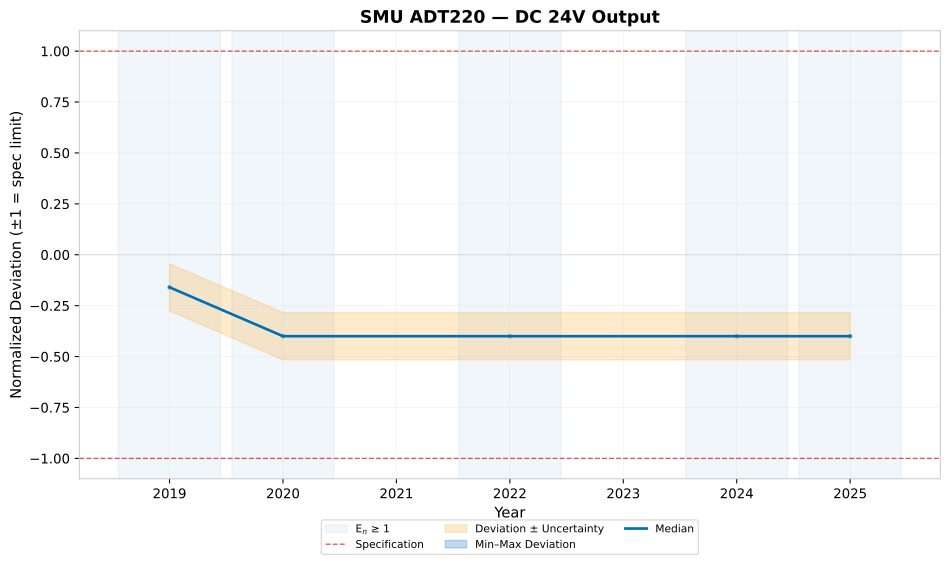
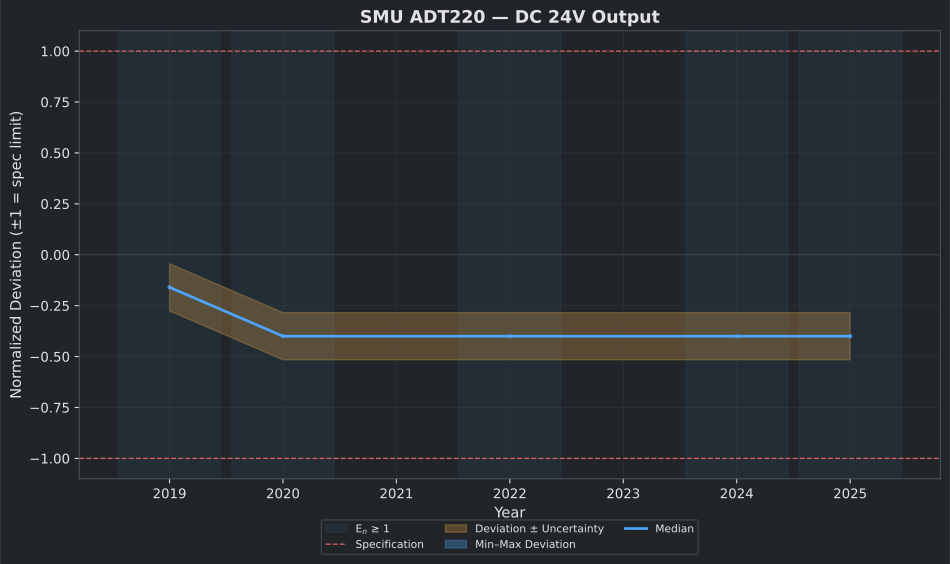
Figure 2 shows the drift between consecutive calibrations — how much the device changed since it was last calibrated or adjusted. This isolates the device’s instability from corrections applied during calibration.
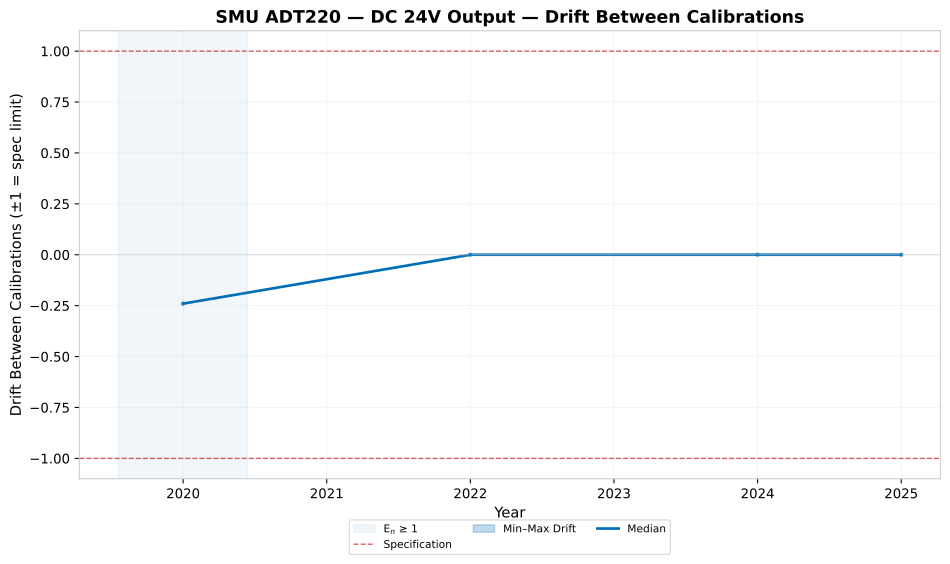
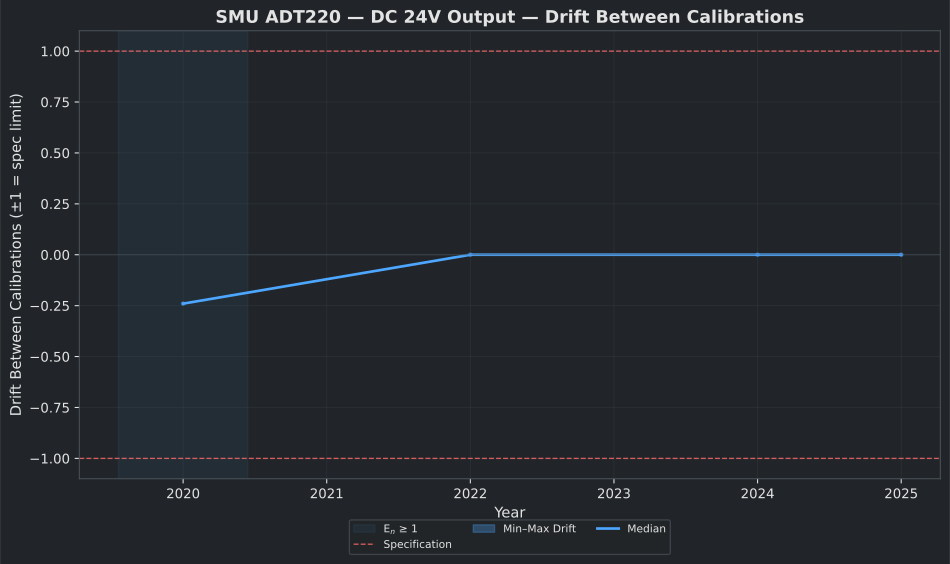
The 24V loop supply has been measured in five of six cycles (not in 2021). The Dev/Spec settled to −0.40 from 2020 onward and has not changed since — consistent with a fixed offset within the output's ±0.5 V specification. No concern.
DC Current Measure (mA)
| Setpoint (mA) | 2019 | 2020 | 2021 | 2022 | 2024 | 2025 | Trend |
|---|---|---|---|---|---|---|---|
| As-found Dev/Spec — measured error normalized to internal specification | |||||||
| -29 | 0.0006 | 0.0009 | -0.0004 | 0.0001 | -0.0006 | -0.0001 | — |
| 4 | -0.0001 | -0.0001 | 0 | 0 | 0.0001 | 0 | — |
| 12 | -0.0002 | -0.0003 | 0.0002 | 0.0001 | 0.0003 | 0 | — |
| 20 | -0.0004 | -0.0005 | 0.0004 | 0.0001 | 0.0005 | 0.0001 | — |
| 29 | -0.0007 | -0.0009 | 0.0004 | -0.0001 | 0.0005 | 0 | — |
| Inter-calibration drift Dev/Spec (Δ) — change since previous calibration, normalized | |||||||
| -29 | — | 0.0003 | -0.0013 | 0.0005 | -0.0007 | 0.0005 | — |
| 4 | — | 0 | 0.0001 | 0 | 0.0001 | -0.0001 | — |
| 12 | — | -0.0001 | 0.0005 | -0.0001 | 0.0002 | -0.0003 | — |
| 20 | — | -0.0001 | 0.0009 | -0.0003 | 0.0004 | -0.0004 | — |
| 29 | — | -0.0002 | 0.0013 | -0.0005 | 0.0006 | -0.0005 | — |
Figure 3 shows each calibration's as-found deviation normalized to the internal specification. Values at ±1.0 reach the specification limit. The shaded blue envelope covers the full spread across all setpoints; the amber band adds measurement uncertainty. For the full methodology, see Equipment Monitoring & Drift Analysis.
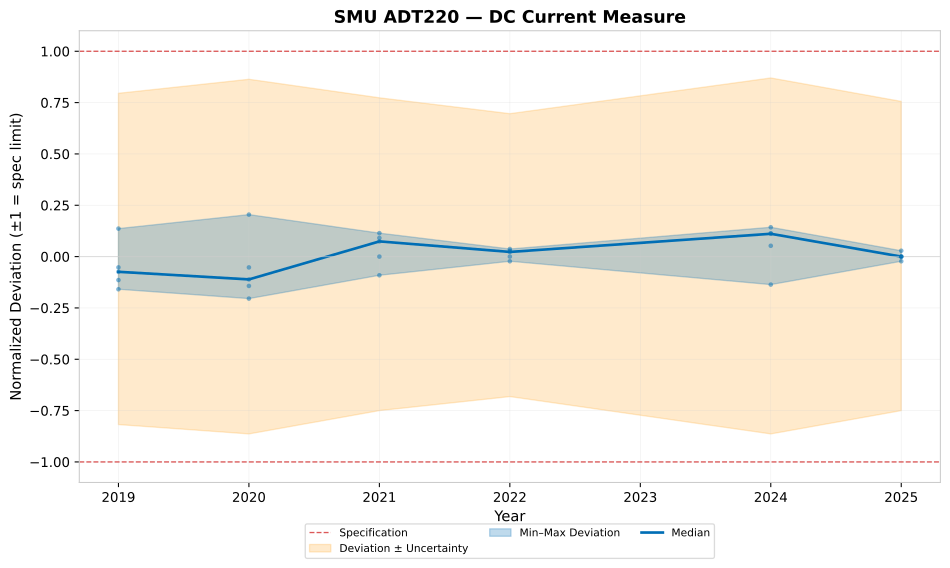
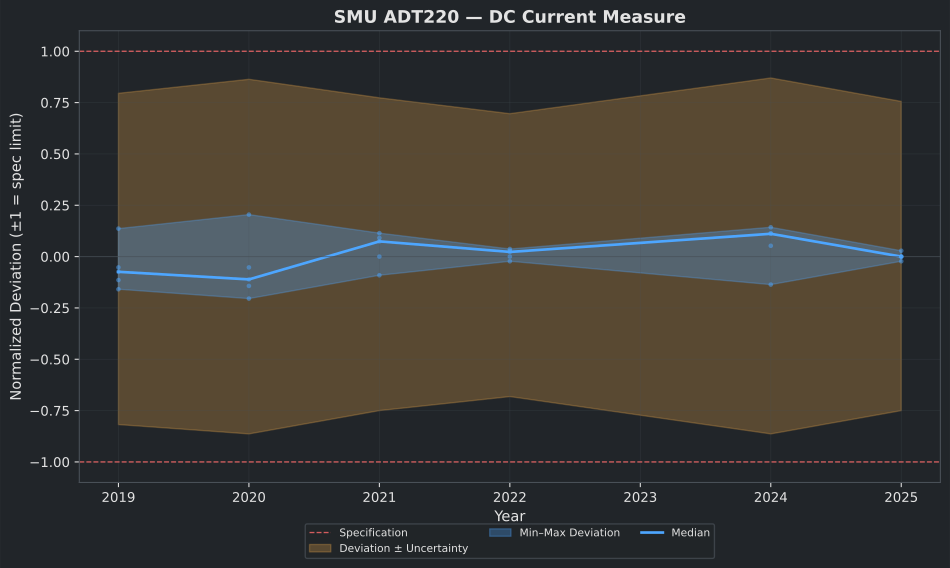
Figure 4 shows the drift between consecutive calibrations — how much the device changed since it was last calibrated or adjusted. This isolates the device’s instability from corrections applied during calibration.
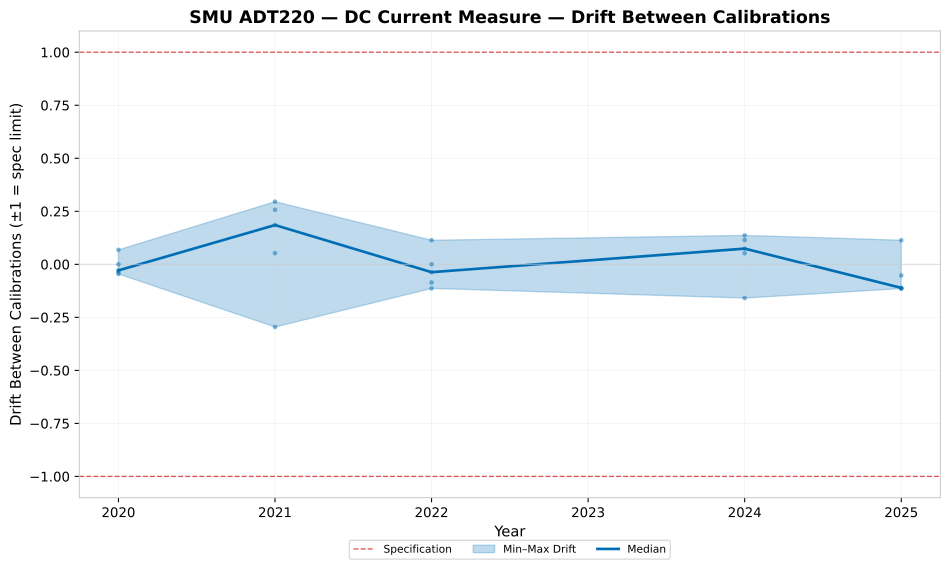
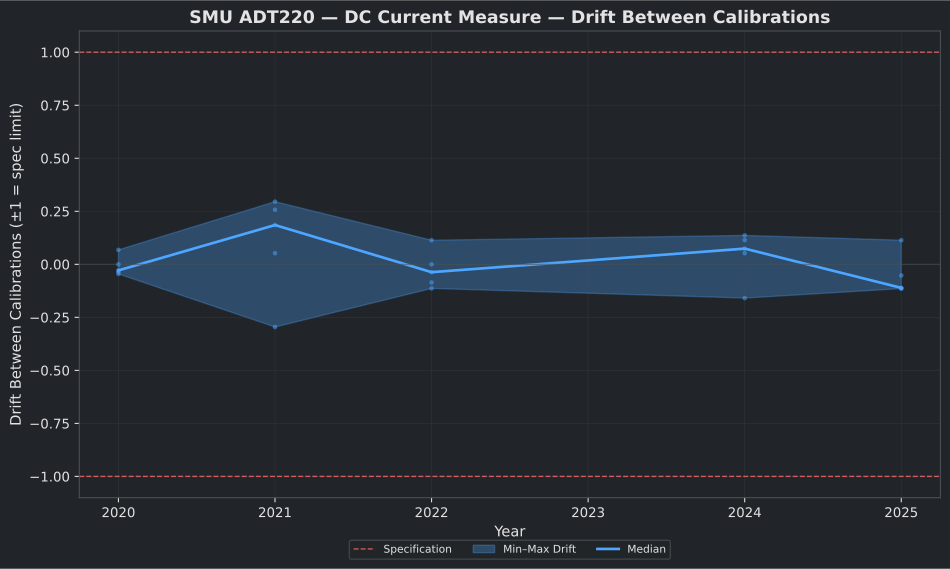
All five setpoints are within specification across six cycles. The scatter is small — worst case |Dev/Spec| of 0.20 (−29 mA, 2020). All trend forecasts indicate stable behaviour.
DC Current Source (mA)
| Setpoint (mA) | 2019 | 2020 | 2021 | 2022 | 2024 | 2025 | Trend |
|---|---|---|---|---|---|---|---|
| As-found Dev/Spec — measured error normalized to internal specification | |||||||
| 4 | 0.0005 | 0.0006 | 0.0006 | 0.0006 | 0.0006 | 0.0005 | — |
| 8 | 0.0004 | 0.0004 | 0.0004 | 0.0005 | 0.0004 | 0.0002 | — |
| 12 | 0.0002 | 0.0001 | 0.0002 | 0.0003 | 0.0003 | 0 | — |
| 16 | 0.0003 | 0.0003 | 0 | 0.0002 | -0.0007 | -0.0002 | — |
| 20 | 0.0004 | 0.0004 | 0.0002 | 0.0004 | -0.0007 | -0.0001 | — |
| Inter-calibration drift Dev/Spec (Δ) — change since previous calibration, normalized | |||||||
| 4 | — | 0.0001 | 0 | 0 | 0 | -0.0001 | — |
| 8 | — | 0 | 0 | 0.0001 | -0.0001 | -0.0002 | — |
| 12 | — | -0.0001 | 0.0001 | 0.0001 | 0 | -0.0003 | — |
| 16 | — | 0 | -0.0003 | 0.0002 | -0.0009 | 0.0005 | — |
| 20 | — | 0 | -0.0002 | 0.0002 | -0.0011 | 0.0006 | — |
Figure 5 shows each calibration's as-found deviation normalized to the internal specification. Values at ±1.0 reach the specification limit. The shaded blue envelope covers the full spread across all setpoints; the amber band adds measurement uncertainty. For the full methodology, see Equipment Monitoring & Drift Analysis.
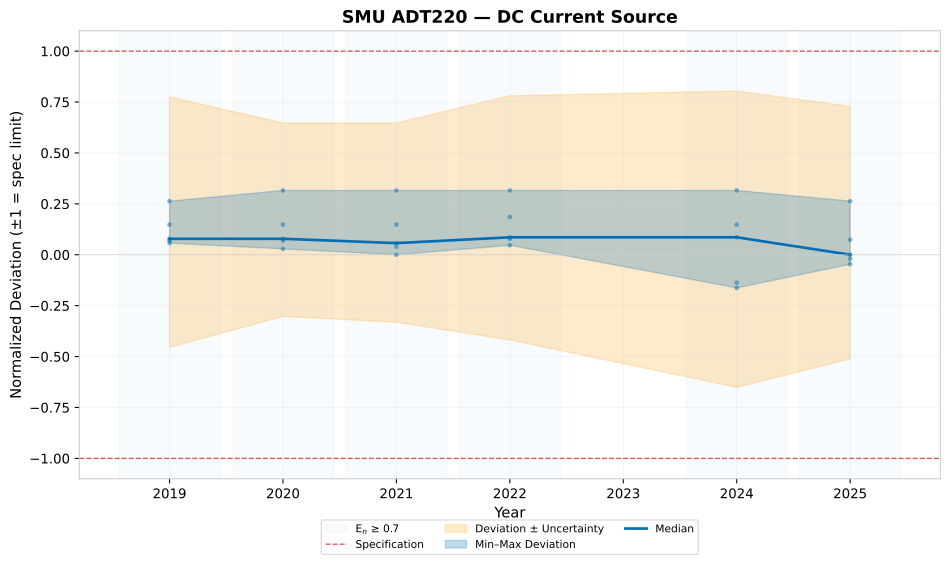
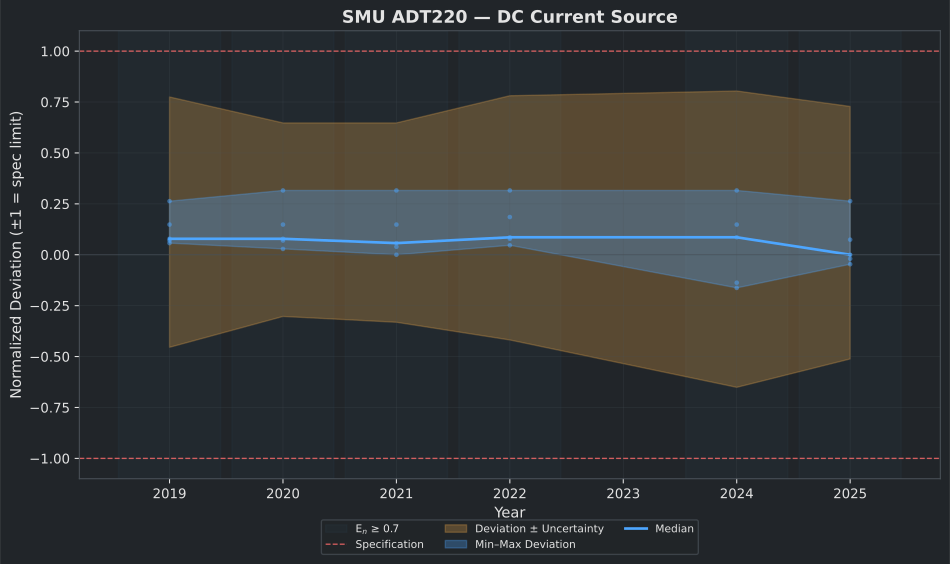
Figure 6 shows the drift between consecutive calibrations — how much the device changed since it was last calibrated or adjusted. This isolates the device’s instability from corrections applied during calibration.
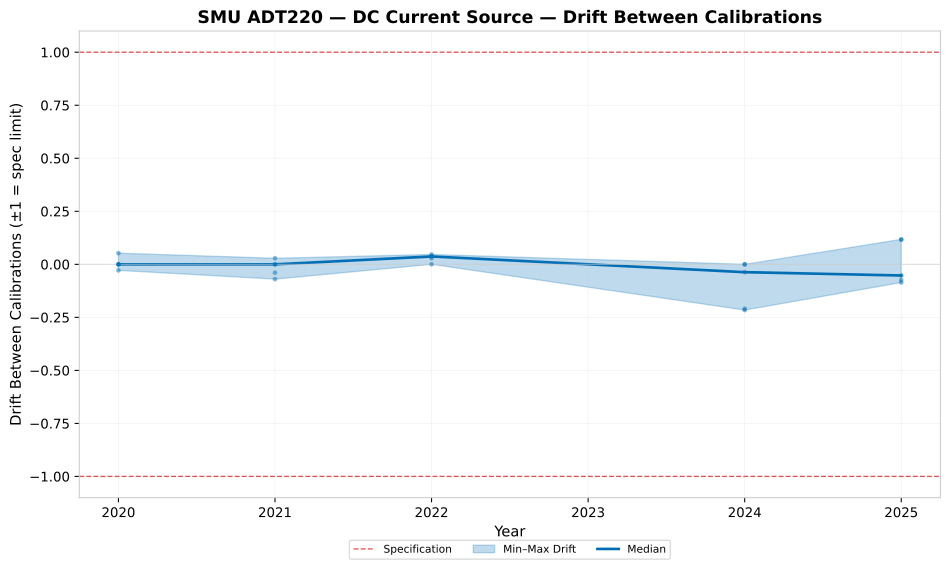
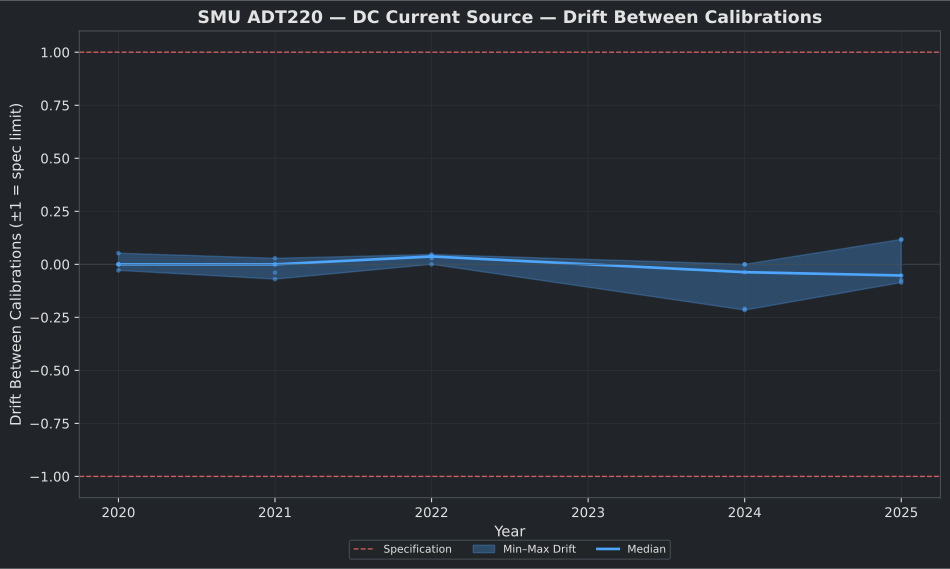
All five setpoints are within specification across six cycles. The 4 mA setpoint shows a consistent positive offset (~0.26 to 0.32) — this is the lowest setpoint where the fixed offset component dominates the specification, not a drift trend. All trend forecasts indicate stable behaviour.
DC Voltage Measure (V)
| Setpoint (V) | 2019 | 2020 | 2021 | 2022 | 2024 | 2025 | Trend |
|---|---|---|---|---|---|---|---|
| As-found Dev/Spec — measured error normalized to internal specification | |||||||
| -55 | 0.0008 | 0.0006 | -0.0031 | -0.0006 | -0.0021 | -0.0017 | — |
| -0.29 | -7e-06 | -7e-06 | -2e-05 | -1.8e-05 | -2.1e-05 | -1.4e-05 | — |
| 0.01 | 0 | 0 | 0 | -3e-06 | 0 | 0 | — |
| 0.05 | 1e-06 | 2e-06 | 2e-06 | 0 | 3e-06 | 1e-06 | — |
| 0.1 | 3e-06 | 3e-06 | 5e-06 | 3e-06 | 6e-06 | 4e-06 | — |
| 0.29 | 8e-06 | 8e-06 | 1.8e-05 | 1.3e-05 | 2e-05 | 1.3e-05 | — |
| 1 | 0 | 0 | 0 | 0.0001 | 0 | 0 | — |
| 15 | -0.0001 | 0 | 0 | 0.0004 | 0.0008 | 0.0005 | — |
| 25 | 0 | 0.0001 | 0.0017 | 0.0008 | 0.0014 | 0.0011 | — |
| 55 | -0.0003 | 0 | 0.0034 | 0.0015 | 0.0029 | 0.0022 | — |
| Inter-calibration drift Dev/Spec (Δ) — change since previous calibration, normalized | |||||||
| -55 | — | -0.0002 | -0.0037 | 0.0025 | -0.0015 | 0.0004 | — |
| -0.29 | — | 0 | -1.3e-05 | 2e-06 | -3e-06 | 7e-06 | — |
| 0.01 | — | 0 | 0 | -3e-06 | 3e-06 | 0 | — |
| 0.05 | — | 1e-06 | 0 | -2e-06 | 3e-06 | -2e-06 | — |
| 0.1 | — | 0 | 2e-06 | -2e-06 | 3e-06 | -2e-06 | — |
| 0.29 | — | 0 | 1e-05 | -5e-06 | 7e-06 | -7e-06 | — |
| 1 | — | 0 | 0 | 0.0001 | -0.0001 | 0 | — |
| 15 | — | 0.0001 | 0 | 0.0004 | 0.0004 | -0.0003 | — |
| 25 | — | 0.0001 | 0.0016 | -0.0009 | 0.0006 | -0.0003 | — |
| 55 | — | 0.0003 | 0.0034 | -0.0019 | 0.0014 | -0.0007 | — |
Figure 7 shows each calibration's as-found deviation normalized to the internal specification. Values at ±1.0 reach the specification limit. The shaded blue envelope covers the full spread across all setpoints; the amber band adds measurement uncertainty. For the full methodology, see Equipment Monitoring & Drift Analysis.
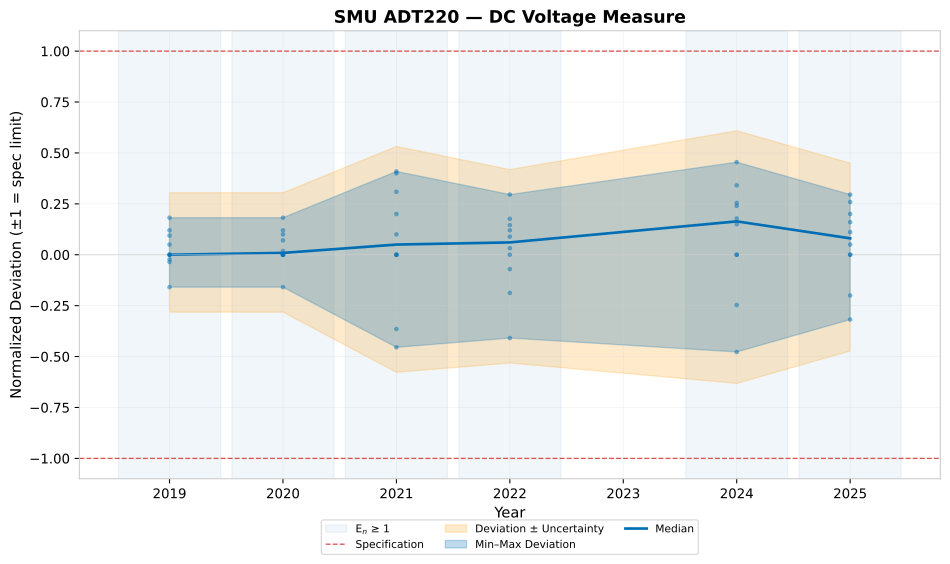
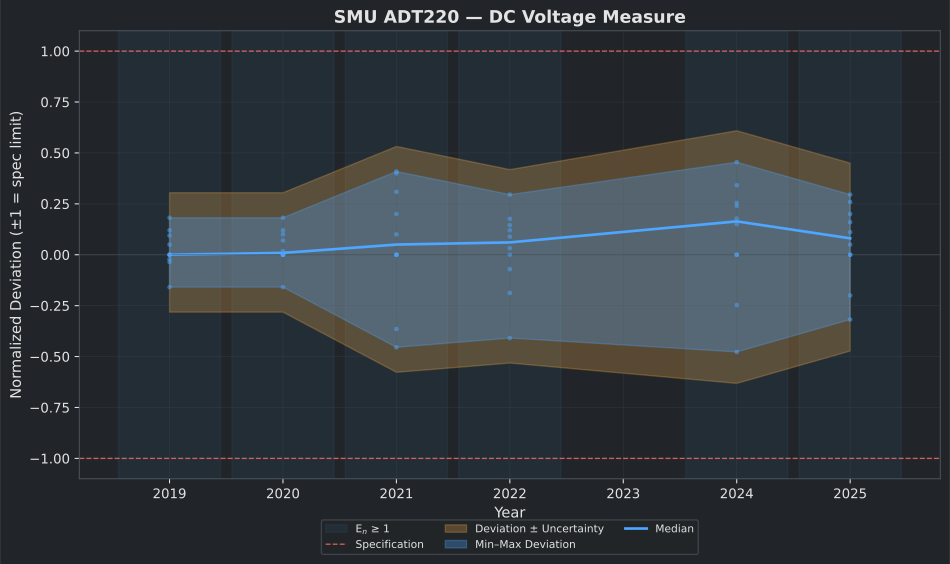
Figure 8 shows the drift between consecutive calibrations — how much the device changed since it was last calibrated or adjusted. This isolates the device’s instability from corrections applied during calibration.
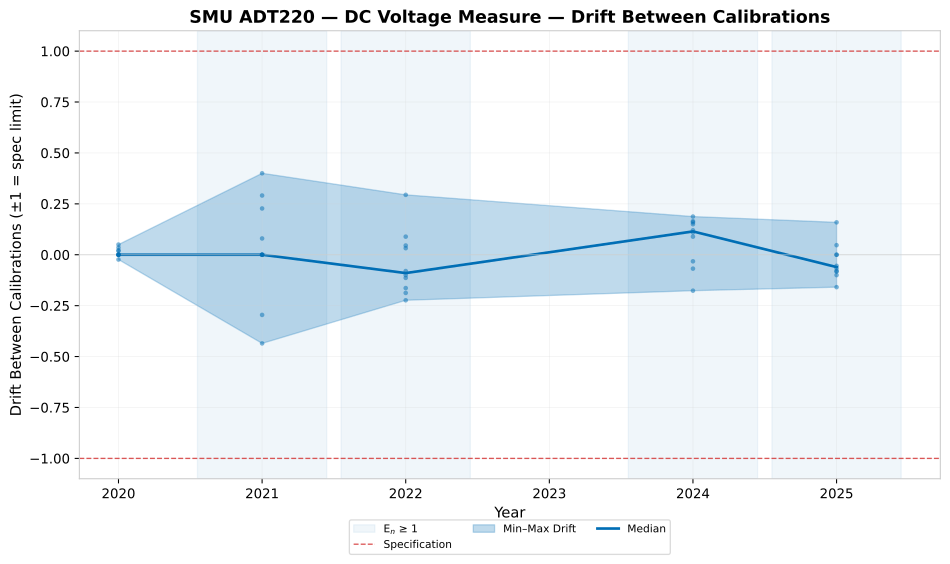
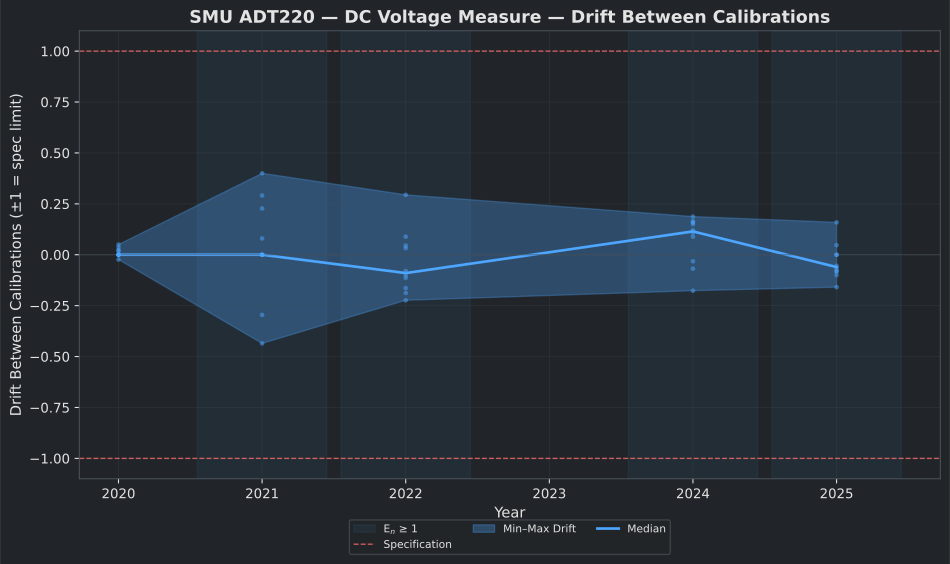
All ten setpoints are within specification across six cycles, spanning two ranges (300 mV and 60 V). The mV-range setpoints near zero are very quiet. The higher-voltage setpoints show some scatter — worst case −0.48 (−0.29 V, 2024) — but no systematic trend. All trend forecasts indicate stable behaviour.
DC Voltage Source (V)
| Setpoint (V) | 2019 | 2020 | 2021 | 2022 | 2024 | 2025 | Trend |
|---|---|---|---|---|---|---|---|
| As-found Dev/Spec — measured error normalized to internal specification | |||||||
| -0.009 | 1e-06 | 1e-06 | 1e-06 | -3e-06 | -1e-06 | 1e-06 | — |
| 0.01 | 2e-06 | 1e-06 | 2e-06 | -1e-06 | 1e-06 | 1e-06 | — |
| 0.075 | 3e-06 | 2e-06 | 2e-06 | 0 | 2e-06 | 1e-06 | — |
| 0.135 | 2e-06 | 1e-06 | 1e-06 | 0 | 2e-06 | 0 | — |
| 0.19 | 2e-06 | 0 | 0 | 0 | 2e-06 | -1e-06 | — |
| 2 | 0.0001 | 0.0001 | 0.0001 | 0.0002 | 0.0002 | 0.0001 | — |
| 4 | 0.0004 | 0.0004 | 0.0005 | 0.0005 | 0.0005 | 0.0004 | — |
| 6 | 0.0004 | 0.0005 | 0.0005 | 0.0006 | 0.0006 | 0.0005 | — |
| 8 | 0.0007 | 0.0008 | 0.0009 | 0.001 | 0.001 | 0.0008 | — |
| 10 | 0.0007 | 0.0008 | 0.001 | 0.0011 | 0.0011 | 0.0008 | — |
| Inter-calibration drift Dev/Spec (Δ) — change since previous calibration, normalized | |||||||
| -0.009 | — | 0 | 0 | -4e-06 | 2e-06 | 2e-06 | — |
| 0.01 | — | -1e-06 | 1e-06 | -3e-06 | 2e-06 | 0 | — |
| 0.075 | — | -1e-06 | 0 | -2e-06 | 2e-06 | -1e-06 | — |
| 0.135 | — | -1e-06 | 0 | -1e-06 | 2e-06 | -2e-06 | — |
| 0.19 | — | -2e-06 | 0 | 0 | 2e-06 | -3e-06 | — |
| 2 | — | 0 | 0 | 0.0001 | 0 | -0.0001 | — |
| 4 | — | 0 | 0.0001 | 0 | 0 | -0.0001 | — |
| 6 | — | 0.0001 | 0 | 0.0001 | 0 | -0.0001 | — |
| 8 | — | 0.0001 | 0.0001 | 0.0001 | 0 | -0.0002 | — |
| 10 | — | 0.0001 | 0.0002 | 0.0001 | 0 | -0.0003 | — |
Figure 9 shows each calibration's as-found deviation normalized to the internal specification. Values at ±1.0 reach the specification limit. The shaded blue envelope covers the full spread across all setpoints; the amber band adds measurement uncertainty. For the full methodology, see Equipment Monitoring & Drift Analysis.
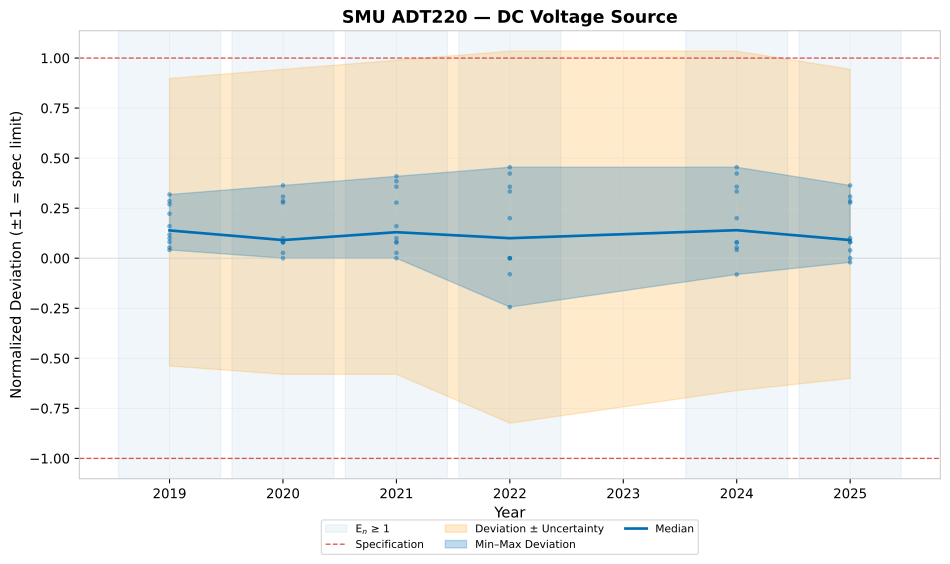
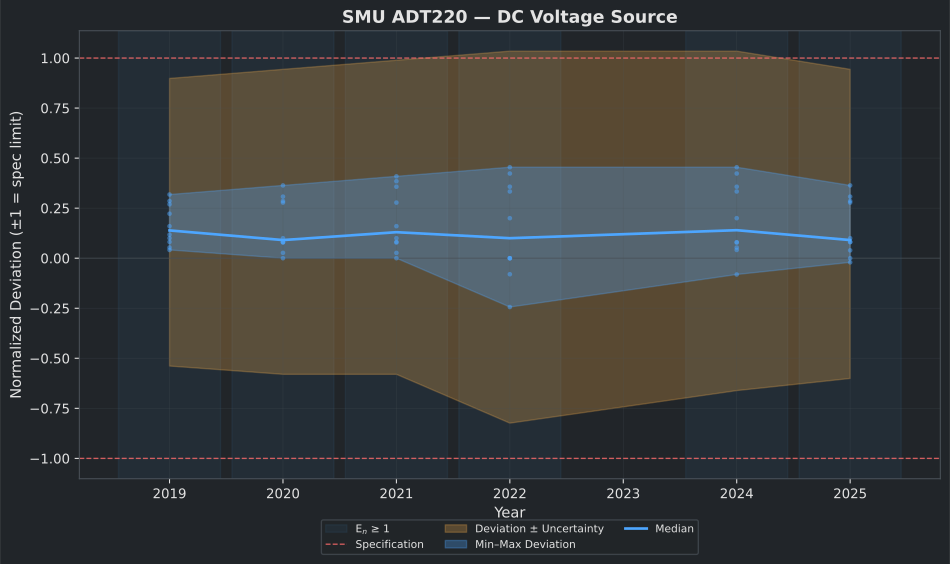
Figure 10 shows the drift between consecutive calibrations — how much the device changed since it was last calibrated or adjusted. This isolates the device’s instability from corrections applied during calibration.
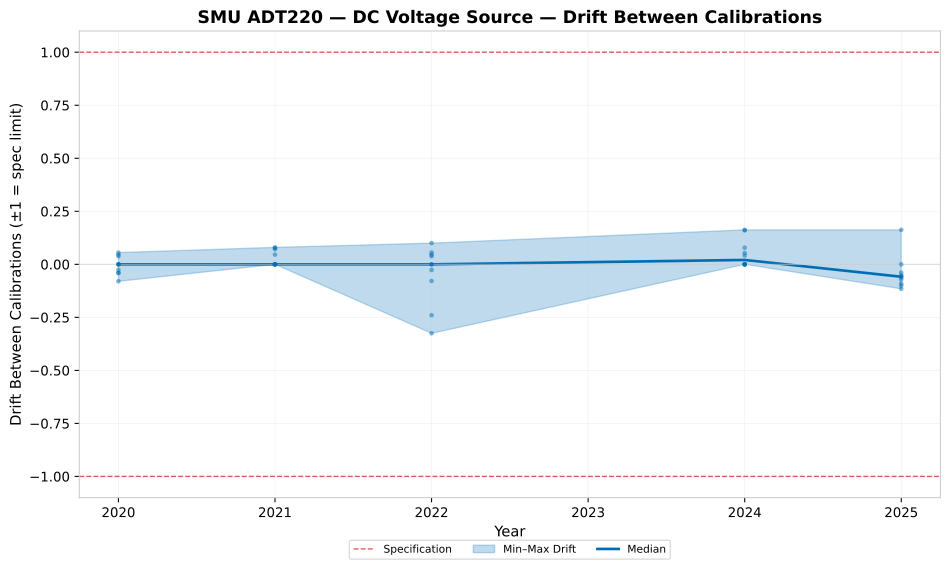
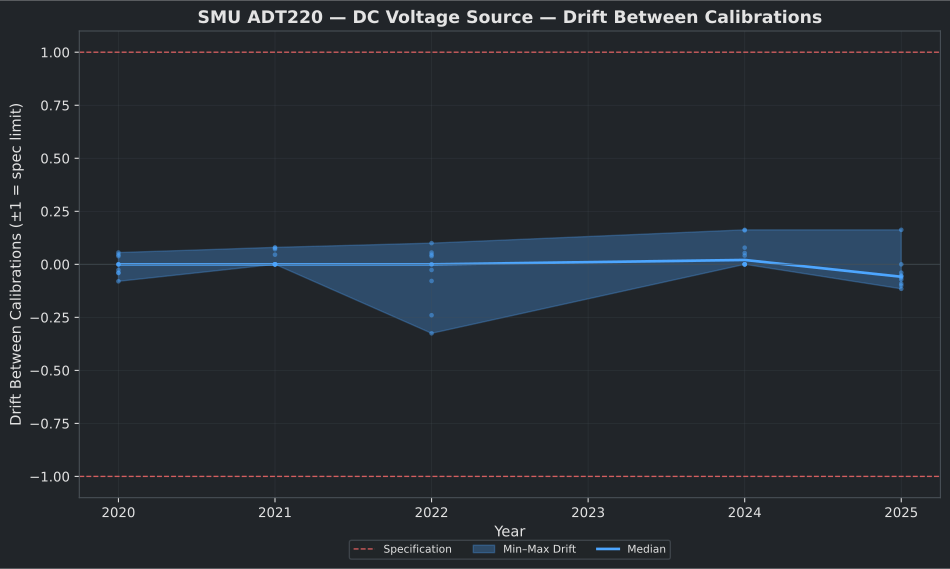
All ten setpoints are within specification across six cycles, spanning two ranges (200 mV and 12 V). The mV-range setpoints are very quiet. The higher-voltage setpoints (4–10 V) show a mild positive drift from 2019 to 2022, peaking at 0.45 (8 V, 2022), then corrected slightly in 2025. All trend forecasts indicate stable behaviour.
Conclusion
Calibration interval. The interval is extended from two years to four years. Electrical measurement uncertainty is negligible compared to mass flow calibration uncertainty — the dominant contributors are the flow reference standards, not the electrical signal chain. The device has never required adjustment across six cycles, and all functions are comfortably within specification. No action required.